
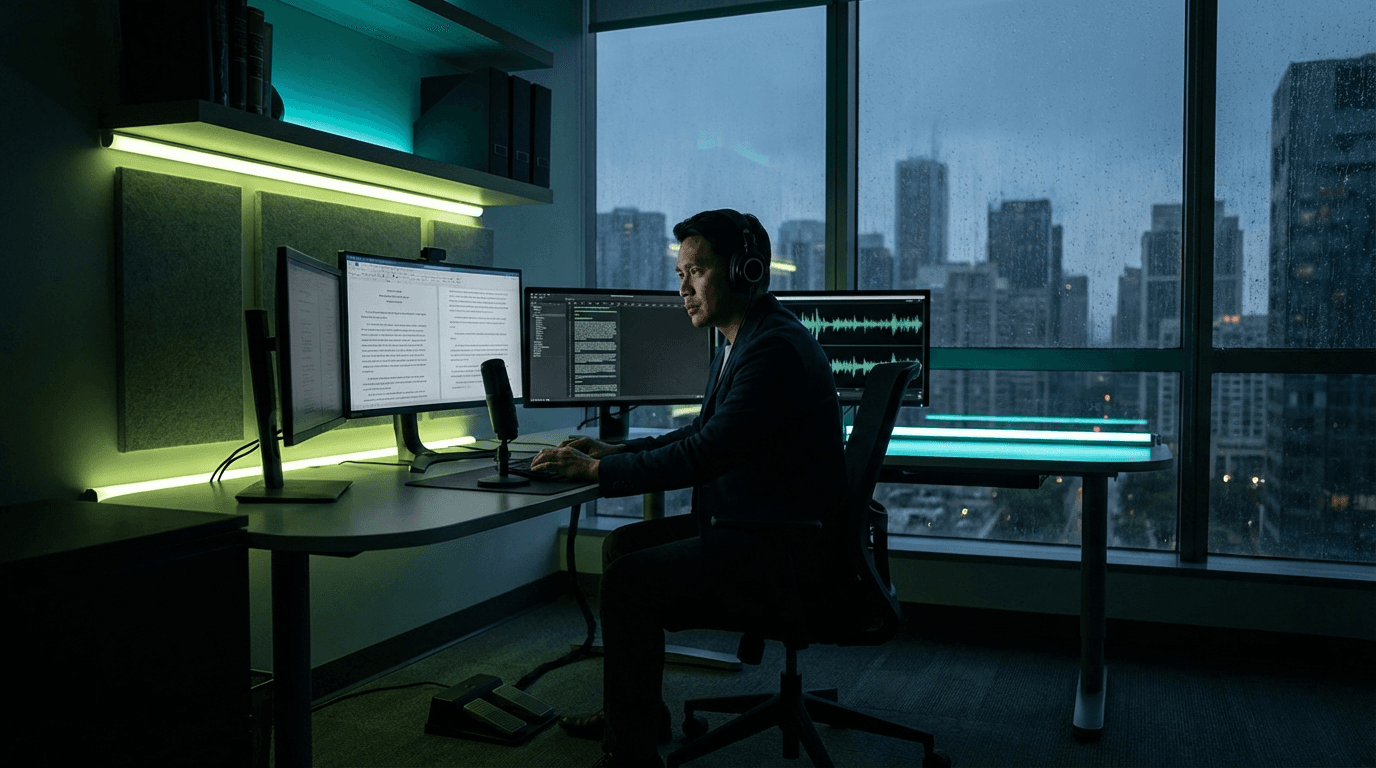

Legal Transcription Virtual Assistant: Your Guide to Cost-Effective Legal Support
In 13 years of offshore hiring, I've watched law firms burn $200+ an hour of senior lawyer time on transcription work that costs $10–25 an hour in the Philippines. A legal transcription virtual assistant fixes that. They convert audio—depositions, client calls, court recordings—into usable documents. Done right, you free up your lawyers and cut costs by 60–70%.
What is a Legal Transcription Virtual Assistant?
A legal transcription VA transcribes audio and video into text. They also proofread, format documents to your firm's standards, manage files in your practice management system, and handle the admin grunt work that keeps your case files organized. It's not glamorous. It's essential.
Why Legal Transcription Matters
Every deposition, client consultation, and court hearing generates audio. If that audio doesn't get transcribed fast and accurately, you're either burning paralegal time or sitting on documents you can't use. The alternative—letting audio pile up because you're short-staffed—costs you in missed deadlines, lost context, and angry clients.
For mid-size law firms, the math is brutal: one paralegal at $50/hour doing 40 hours a month of transcription is $2,000 a month. A competent offshore VA doing the same work costs $400–800 a month. Same output, 75% cheaper.
Key Tasks and Responsibilities
Here's what a legal transcription VA actually does:
- Transcribing recordings: Converts audio from depositions, interviews, and calls into accurate written text.
- Editing and proofreading: Catches typos, corrects timestamps, flags inaudible sections, ensures the document is clean.
- Formatting documents: Applies your firm's preferred layout, legal citation format, and templates (APA, MLA, or custom).
- File management: Stores transcripts in Clio, PracticePanther, or your system; tags and indexes them for retrieval.
- Research and context: Adds case references, pulls legal citations, or cross-references documents as needed.
- Assisting with case prep: Compiles deposition summaries, flags key testimony, prepares document bundles for trial.
How to Hire a Legal Transcription Virtual Assistant
Hiring someone who can actually transcribe legal audio isn't complicated if you know what to look for.
1. Define Your Needs
Do you need 10 hours a week or 40? Are you covering depositions only, or all client calls? What's your turnaround—overnight or same-day? Clear scope stops you hiring the wrong person.
2. Seek Relevant Experience
Find someone who's done legal transcription before. They'll know what "colloquy" means, how to handle legal names, and why timestamps matter. Legal jargon is dense. Someone without legal exposure will waste your time asking questions.
3. Evaluate Skills
Test them: send a 5-minute audio clip with legal content (depositions, legal arguments) and see what they return. Speed isn't everything—accuracy is. A VA who finishes fast but gets case names wrong is useless. Also check: typing speed (minimum 60 WPM), software familiarity (Express Scribe, Otter.ai), and whether they've used legal practice management software.
4. Use Reputable Platforms
ShoreAgents vets people on actual skills, not just resume keywords. You get someone pre-screened for legal work, not a lottery ticket.
Cost Considerations
Offshore legal transcription VAs from the Philippines run $10–25 per hour depending on experience. A junior VA with solid English might be $12/hour. Someone who's done 5+ years of legal transcription might be $20–25/hour. That's still 1/3 the cost of a US paralegal doing the same work.
The trap: ultra-cheap rates ($5/hour) often mean poor quality, missed deadlines, and turnover. You get what you pay for. $15–18/hour finds you someone competent and stable.
Other costs to budget: software licenses (Clio costs the same whether the user is US or Philippine-based), and 1–2 weeks of onboarding to get them familiar with your workflows.
Why the Philippines? The Ideal Offshore Destination
I started hiring in the Philippines in 2012 for REMAX. Fourteen years later, I built Shore Agents here. There are real reasons it works:
- English proficiency: The Philippines has a 98%+ literacy rate and English as the official second language. VAs from Clark or Metro Manila have strong English; you won't be battling comprehension issues.
- Legal knowledge: The Philippine legal system is rooted in English common law. VAs understand legal terminology, court structure, and why accuracy matters. They're not starting from scratch learning what a "deposition" is.
- Workforce depth: Thousands of law graduates and paralegals in the Philippines can't find work locally. You're hiring from a deep, educated pool. Turnover is lower than you'd expect because the work is stable.
- Cost advantage: A VA in Clark making $15/hour is earning 3–4× the local average. They're motivated and reliable. Meanwhile, that same $15/hour is 1/3 the US cost.
- Infrastructure: Clark Freeport Zone has reliable power and internet. Your VA won't disappear because of a brownout or dropped connection.
Real Tools and Platforms Used in Legal Transcription
Your VA needs to work in your ecosystem. Here's what actually matters:
- Transcription software: Express Scribe is the industry standard—cheap, reliable, keyboard shortcuts matter when you're doing 40+ hours a week. Otter.ai works for basic stuff but struggles with legal terminology and accents.
- Practice management: Clio and PracticePanther are the main ones. Your VA will need access and training on how you organize cases, upload files, and tag documents.
- Voice recognition: Dragon NaturallySpeaking is good for rough drafts but hopeless for depositions with multiple speakers. Your VA still has to edit the mess.
- Communication: Slack, Zoom, or Microsoft Teams. Your VA shouldn't be email-only. Real-time comms means faster turnaround on clarifications.
Integrating Legal Transcription into Your Business Model
Hiring a VA doesn't work if you don't integrate them properly:
- Clear handoff: Audio file → VA gets it within 2 hours → transcript due in 24 hours. Write it down. No ambiguity on deadlines or formats.
- Feedback loop: Check their first 10 transcripts closely. Give specific feedback: "Flag names you're unsure of in brackets [like this]" or "Add timestamps every 2 minutes." Most VAs want to do it right; they just need to know your standards.
- Quality assurance: Spot-check every 5th transcript, not because you distrust them, but to catch drift. A good VA will actually appreciate it because they'll catch their own mistakes.
Conclusion: Your Path to Cost-Effective Legal Support
If your lawyers are drowning in transcription, outsource it. A legal transcription VA from the Philippines costs a fraction of what you're burning internally and does it better because that's their speciality. I've hired hundreds of offshore staff since 2012. The ones who last are hired to do one job excellently, not to be a Swiss Army knife. Transcription is one job. Find someone good at it.
Check our pricing to see what a dedicated legal transcription VA actually costs, or jump to get started to match with someone. ShoreAgents handles the vetting and onboarding. You focus on law.
Ready to Hire Your legal Assistant?
Get matched with pre-vetted legal VAs in 24 hours. Transparent pricing, no hidden fees.
Related Articles
Legal Document Preparation VA
Australian lawyers waste 20+ hours weekly on document admin. Shore Agents places legal VAs in Clark at $15/hr. 70% of clients add a second within 6 months.
Legal Billing Virtual Assistant
Billing inefficiency bleeds law firms dry. A competent legal VA recovers 5-10 billable hours weekly and eliminates billing errors. Pays itself in month one.
Legal Virtual Assistant
Your legal VA may be practicing law without realizing it. 80% of firms cross the line. Shore Agents tells you what's safe—no guesswork, no risk to your license.