

Hire a SketchUp Virtual Assistant: Scale Your Construction Business
If you're running 5+ projects a month and your team's SketchUp backlog is eating into delivery timelines, you need a SketchUp VA in Clark. I've been hiring offshore since 2012 at REMAX—13 years of testing what works and what doesn't. A good SketchUp VA kills two problems at once: frees your senior people from model churn and cuts labour costs by 60-70% versus hiring locally. This article covers what a SketchUp VA actually does, what to expect, how to hire without wasting time, cost breakdown, and why Philippines-based talent from ShoreAgents wins.
What is a SketchUp Virtual Assistant?
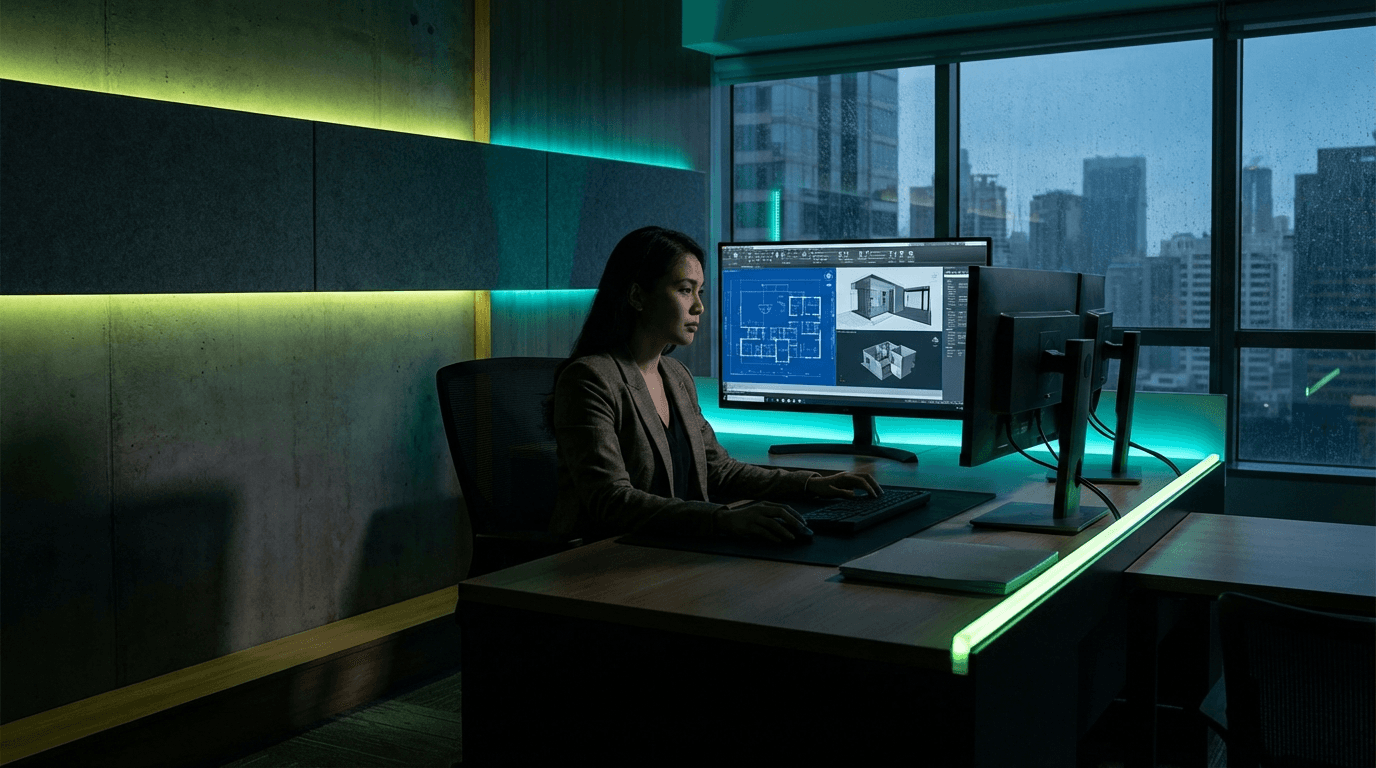
A SketchUp VA is someone who lives in their SketchUp. They're building 3D models, generating technical drawings, creating client presentations, and handling design revisions. They're not project managers or architects—they're the person who takes your sketches and notes and turns them into clean, renderable models that stakeholders can actually visualize. Most come from architecture or engineering backgrounds. The good ones also know Revit, Autocad, or BIM tools as a bonus.
Why This Matters for Your Business
Construction projects are visual. Your clients need to see what they're paying for before a single brick lands on site. Your team needs accurate models for coordinating trades and spotting clashes early. When you're understaffed on SketchUp, everything backs up—presentations slip, feedback loops drag, and your senior people are doing grunt work instead of closing deals or managing risk.
Over 500+ construction placements since 2019, I've watched firms add a SketchUp VA and see three things happen: faster presentation turnaround (usually 3-5 days instead of 2-3 weeks), fewer revision cycles because the model is cleaner from the start, and your architects back to doing actual design work. That's not soft metric stuff—it's real money in reduced rework and faster contract closeouts.
Key Tasks and Responsibilities
Here's what you actually get from a SketchUp VA:
- 3D Modeling: Buildings, landscapes, interiors—whatever you're designing. They nail dimensions, materials, and detail.
- Technical Drawings: Floor plans, elevations, sections, details. Production drawings that contractors can work from.
- Rendering: Materials, lighting, textures. Makes your model look like the thing you're actually building, not a wire frame.
- Design Collaboration: Works with your architects, engineers, builders. Catches coordination issues before they hit the site.
- Client Presentations: Takes your models and builds walkthroughs, flybys, whatever tells the story. Clients understand "yes" faster with a good render than a 50-page specification.
- Revisions: Client says "move that wall 2 metres left" at 4pm Friday? Good VA has it updated by Monday morning.
- Scheduling & Visual Planning: Construction sequences, phase layouts, site logistics. Some of the best VAs use SketchUp for project visualization, not just design.
How to Hire a SketchUp Virtual Assistant
Hiring is straightforward if you don't skip steps:
- Write down what you actually need. Are you drowning in model updates? Do you need client presentations prepped? Are you doing BIM coordination? Be specific. Vague briefs attract vague candidates.
- Job posting that works: List the software (SketchUp, Revit, AutoCAD, Lumion, whatever), examples of the work you're sending, expected turnaround, communication style you want. Don't just copy-paste a generic VA posting.
- Where to source: Upwork and Freelancer are fine for contract pilots. For committed offshore staff, use a BPO agency like ShoreAgents. You get vetting, backup coverage if someone leaves, and legal compliance (NBI clearance, contract in Philippine Labor Code terms).
- Interview hard on specifics. Show them a real model. Ask them to open it, describe what they see, propose improvements. Watch their SketchUp workflow—slow clicking is a bad sign. Ask about their software versions and render engines. Details matter.
- Trial project first. Before committing 40 hours a week, send one small project. A single house floor plan or a minor renovation. See if they ask clarifying questions, how clean the work is, and how they handle feedback. Two-week trial catches 90% of bad fits.
Cost Breakdown
A SketchUp VA from the Philippines runs $8-15/hour depending on skill level and experience. Someone fresh out of architecture school: $8-10/hour. Someone with 5+ years and Revit chops: $12-15/hour. For comparison, hiring an in-house draughtsperson in Australia or the US costs $25-35/hour minimum, plus superannuation, leave, tax.
Real-world math: An in-house draughtsperson costs $65k-75k AUD annually (salary + super + overhead). A full-time SketchUp VA in Clark (40 hours/week at $12/hour) costs about $25k AUD per year. That's a $40-50k saving. Most firms I've worked with add 1-2 VAs, pocket the savings, and deliver projects faster. The 60% cost saving is real, not marketing talk.
Why the Philippines Works for SketchUp Work
I've hired offshore for 13 years. The Philippines isn't magic—it's practical. Here's why it works for SketchUp specifically:
- Architecture schools are solid. University of the Philippines, De La Salle, Ateneo turn out people who know their way around design software. It's not accidental—it's curriculum.
- English fluency is real. Unlike other markets where language is a bottleneck, most Filipino professionals speak English well enough to handle client calls, email specs, and Slack banter without friction.
- They already know the software stack. SketchUp, Revit, AutoCAD, Lumion, V-Ray—these are standard in Philippine architectural education. They show up ready to work, not needing 6 weeks of tooling up.
- Work ethic is consistent. I say this after 13 years and 500+ hires: Filipino professionals take their work seriously. Deadlines matter to them. They communicate when something's stuck. It's not a stereotype—it's what the data shows.
- 13th month pay and legal protection matter. ShoreAgents handles Philippine Labor Code compliance, NBI clearances, proper contracts. You're not operating in a grey zone—your VA has real employment rights and stability.
ShoreAgents vets hard. We've tested hundreds of SketchUp candidates. The ones we place are people who've passed portfolio review, technical screening, and reference checks. You get someone who can actually do the work, not someone who installed SketchUp last week.
Conclusion
Scaling construction is hard. Adding a SketchUp VA removes one specific bottleneck: the tooling time between your architects' ideas and your clients' understanding. You free your team for client work, strategy, and risk. You cut costs. You move faster. It's not sexy, but it works.
If you're ready to test this, start with a trial project. We can match you with a VA in Clark within a week and have them on a real model within days. Get started here, or check pricing and team structure options. If you want to explore other construction roles—CAD ops, BIM coordination, shop drawing VAs—we've got those too.
Ready to Hire Your construction Assistant?
Get matched with pre-vetted construction VAs in 24 hours. Transparent pricing, no hidden fees.
Related Articles
GIS Virtual Assistant: Revolutionizing Construction Efficiency
Construction delays kill margins. GIS VAs catch data errors before they cost you weeks. Shore Agents places them from the Philippines at $20–30/hr. See why.
Drafting Outsourcing: Scale Your Construction Business with Virtual Assistants
Your CAD drafters cost $32/hour, not $15. We break down the hidden costs — software, training, management — that double offshore rates. Real pricing, no BS.
Architecture Admin Virtual Assistant: Streamline Your Construction Business
$2,250–$4,500 wasted weekly on admin work. Architects need a VA who gets Archicad, RFI, and construction timelines. Hire offshore from Shore Agents, Philippines.